What getting cited in ChatGPT gets you
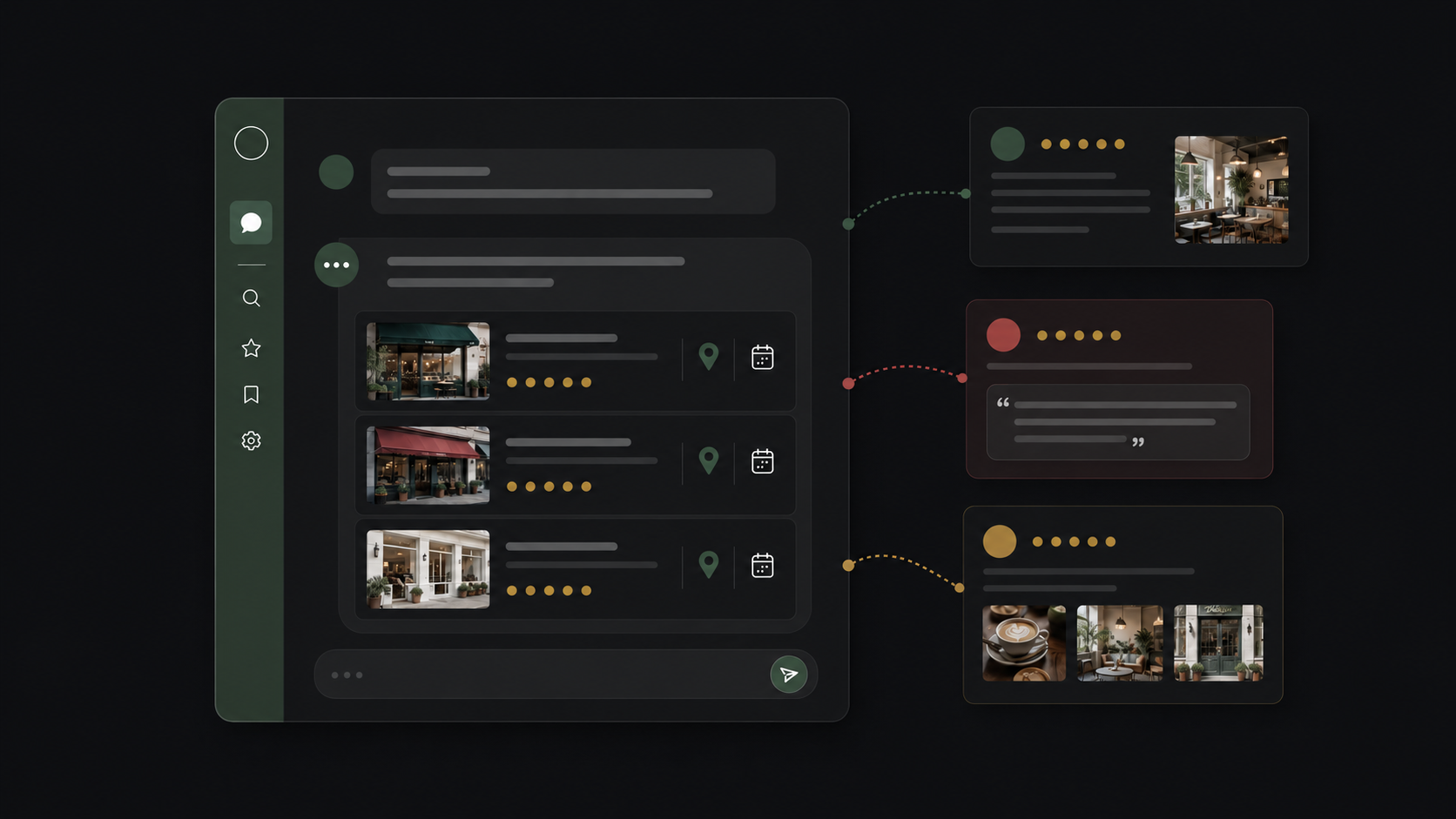
An AI citation earns a business the introduction. It doesn't earn the trust that comes after. Co-host Jim Falotico put it plainly on a recent episode: "Before, you wanted to be the first click, and now that click doesn't exist... So now you want to be the next step." (S2 Ep. 60, Trust Is the New Click)
That's the part most AI visibility checklists miss. They walk a business through schema markup so an AI tool can find and quote the content, then stop. If someone clicks through, the page they land on has seconds to earn them.
The difference between an AI citation and a buyer decision
Two different questions live inside "AI visibility." Can an AI tool tell what a business does and who it's for? And once a buyer lands on the site, can they tell quickly why to choose that business over the next name on the list? Schema markup and clean pages, starting with a plain answer near the top of the page, mostly answer the first (more on that here). A clear next step answers the second.
The second question is different. Once a buyer lands on the site, can they tell quickly why to choose that business over the next name on the list? That comes down to proof and a next step: a case study or real result that backs the claim, and a clear action placed near the top of the page instead of buried at the bottom.
Is your business being cited by AI, or just crawled?
An AI tool can crawl a business's site and use pieces of it in an answer without ever naming the business. Even a real citation may not turn into a click right away. Someone sees the name, then later searches the brand or checks reviews instead of clicking. Treating AI visibility like a normal referral channel misses both patterns.
Why asking a customer beats a dashboard right now
Measurement in this space is still new, and it may not have caught up yet to how people actually move between channels. A tool might log a citation and stop there. A "how did you hear about us" field might file a new customer under Google review when an AI answer was part of the path too. Attribution has always missed some of the story; this layer is just newer than most.
The most reliable signal a business has right now is still direct: ask. When a prospect says "I found you on ChatGPT," that confirms something a dashboard can't yet. Keep asking clients and prospects how they found you, and let them choose more than one answer instead of forcing a single source. People often arrive through more than one path, and a single-choice question hides that.
What to fix on your website before spending on more AI visibility work
Before spending more on content or ads, check whether the site gives someone a clear next step and reason to take it.
- A homepage that names one specific audience and one specific problem
- A visible, specific next action placed near the top of the page
- Proof that backs the claims: a case study, a testimonial, a real result
Zero-click search puts a new step in front of the website, an AI answer, ahead of the click that used to come first. Ranking and getting cited are the opening move. The goal is to become the business a buyer wants to investigate next, and to give them enough reason to act once they do.
FAQ
Why isn't my business showing up in ChatGPT?
There's rarely one cause. Content relevance, authority signals, site readability, geography, and freshness can all play a role. Vague positioning is one of the more common and fixable ones.
Does an AI visibility audit help?
It shows where a business is missing from AI answers, but it solves only half the problem. Getting cited more often pays off only if the site gives the buyer a reason to choose it.
What should I fix first, my AI visibility or my website?
If the site is technically inaccessible or has little indexable content, visibility comes first. Otherwise, positioning, proof, and a clear next action are worth fixing before chasing citation counts.
How do I know if AI is naming my business or just using my content?
Most AI visibility tools show whether your content gets pulled into an answer, not whether your business gets named in it. Ask the AI tool the exact question a buyer would ask and see whether your business comes up by name.